
How Janitorial Services Enhance Office Health and Safety in a Post-COVID World
The modern workplace has changed in ways that few people could have predicted before 2020. The COVID-19 pandemic reshaped how businesses think about cleanliness, employee well-being, and the shared spaces where people spend a significant portion of their lives. Post-pandemic cleaning is no longer a routine checkbox on a facilities management list. It has become a core pillar of responsible business operations. Companies that invest in professional janitorial services are not just keeping their offices tidy; they are actively protecting their workforce and building a culture of trust and accountability.
As employees returned to offices around the world, they brought heightened expectations with them. Workers now pay close attention to the cleanliness of their environment in ways that simply were not common before the pandemic. A visibly clean office signals that leadership takes health seriously. A poorly maintained space, on the other hand, can erode morale, increase absenteeism, and even contribute to employee turnover.
Professional janitorial services bridge the gap between what employees expect and what businesses can realistically manage on their own.
The Science Behind Clean Workspaces and Employee Health
Understanding why office hygiene practices matter requires a closer look at how germs and pathogens spread in shared environments. Offices are high-contact zones where dozens or hundreds of people touch the same surfaces throughout the day. Doorknobs, elevator buttons, shared keyboards, communal kitchen appliances, and restroom fixtures are all potential transmission points for illness-causing bacteria and viruses.
Research conducted in the years following the pandemic has reinforced what many health experts already suspected: the quality and frequency of cleaning in a workplace directly affects the health outcomes of its occupants. Regular disinfection of high-touch surfaces can significantly reduce the presence of harmful pathogens. When janitorial teams use hospital-grade cleaning agents and follow evidence-based protocols, they eliminate threats that casual or untrained cleaning would miss entirely.
Beyond surface cleaning, air quality has emerged as a critical component of office health. Professional cleaning services often incorporate strategies that support better indoor air quality, including the cleaning of ventilation systems, filters, and air-handling units. Dust accumulation in these systems can circulate allergens and airborne particles throughout an entire building. A thorough janitorial program addresses these less visible threats alongside the more obvious ones, creating a comprehensive shield against illness.
Employees who work in consistently clean environments also report lower levels of stress and higher levels of productivity. Clutter and visible grime create a subtle but persistent psychological burden. When that burden is removed through reliable, professional cleaning, workers can focus more completely on their tasks and experience a greater sense of well-being throughout the workday.
COVID Office Safety Standards That Have Become the New Normal
The protocols developed in response to COVID office safety requirements have largely become permanent features of how forward-thinking organizations operate. What began as emergency measures have evolved into best practices that benefit workers regardless of what specific illness might be circulating in any given season.
Electrostatic spraying, for example, was introduced widely during the pandemic as a way to coat surfaces with disinfectant more effectively than traditional wiping methods. Many janitorial companies have retained this technology because of how thoroughly it covers irregular surfaces like chairs, computer equipment, and shelving units. Similarly, the use of color-coded cleaning cloths to prevent cross-contamination between different areas of a building is now a standard expectation rather than a premium add-on.
Disinfection logs and cleaning schedules posted visibly throughout the office have also become a common feature of post-pandemic workplaces. These records serve a dual purpose. First, they hold cleaning teams accountable by creating a documented trail of when and where cleaning occurred. Second, they reassure employees and visitors that the space is being actively maintained. Transparency in cleaning practices has become a meaningful part of how companies communicate their commitment to worker safety.
Professional janitorial services stay current with guidance from public health agencies, updating their methods and products as new information becomes available. This adaptability is something that in-house or informal cleaning arrangements rarely achieve. The investment in a trained, informed janitorial team ensures that COVID office safety standards do not quietly fade as the immediate memory of the pandemic recedes.
Specialized Cleaning for High-Risk Office Zones
Not every part of an office carries the same level of health risk, and effective janitorial services recognize this distinction. A thoughtful cleaning plan allocates extra attention and resources to the areas where contamination is most likely to occur and spread.
Restrooms remain the highest-risk zone in virtually any commercial building. They require frequent cleaning throughout the day, not just at the end of a shift. Professional teams understand the chemistry of restroom sanitation well enough to select the right products for each surface, ensuring that the cleaning process actually eliminates pathogens rather than simply displacing them.
Break rooms and shared kitchens are another critical area. These spaces see high traffic from employees who are often touching their faces, handling food, and using communal appliances in quick succession. Post-pandemic cleaning protocols for these areas include wiping down microwave handles, coffee machine buttons, and refrigerator pulls multiple times per day. Sink faucets and soap dispensers receive particular attention because they are touched by people who are actively trying to clean their hands but may still be carrying contaminants from earlier in the day.
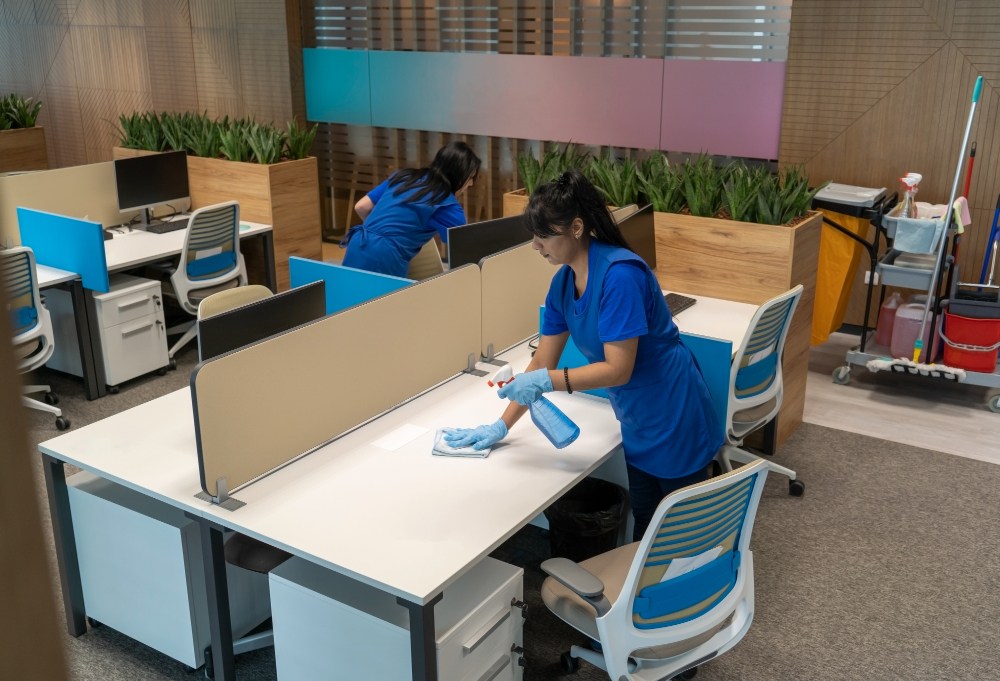
Open-plan work areas present their own challenges, particularly in offices that have adopted hot-desking or flexible seating arrangements. When multiple employees use the same workstation across different shifts or days, the risk of surface-to-surface transmission increases considerably. Janitorial teams trained in office hygiene practices know how to efficiently sanitize workstations between users without disrupting business operations, often working around employee schedules to minimize inconvenience while maximizing cleanliness.
Conference rooms and meeting spaces deserve special attention as well. These rooms concentrate groups of people in relatively small areas for extended periods, which historically makes them effective environments for the spread of respiratory illness. Regular disinfection of tables, chairs, remote controls, and shared technology in these spaces is a meaningful preventive measure that professional cleaners carry out as part of a systematic approach.
Choosing the Right Janitorial Partner for Long-Term Health and Safety
Selecting a janitorial service provider is a decision that deserves careful consideration, particularly given the elevated expectations that define the post-pandemic workplace. Not all cleaning companies offer the same level of training, the same quality of products, or the same commitment to evolving health standards.
Businesses should look for providers that employ staff trained in infection control principles and familiar with current public health guidelines. Certifications from organizations like ISSA, the worldwide cleaning industry association, are a useful indicator that a provider takes professional development seriously. Green cleaning certifications are also worth seeking out, as they indicate that a company uses products that are effective against pathogens while minimizing chemical exposure for building occupants.
Communication is another important factor. A strong janitorial partner will work with facility managers to develop customized cleaning plans that reflect the unique layout, occupancy, and risk profile of each office. They will provide documentation of services rendered and remain responsive when concerns arise. Office hygiene practices are most effective when they are treated as a collaboration between the cleaning team and the client, with both parties invested in continuous improvement.
Contracts should be reviewed with attention to the frequency of deep cleaning services versus routine maintenance visits. Post-pandemic cleaning expectations often include scheduled deep cleaning cycles in addition to daily maintenance, and businesses should confirm that these are explicitly included rather than assumed.
Conclusion
Professional janitorial services have become essential partners in the effort to maintain safe, healthy, and productive office environments. The lessons of the pandemic have permanently elevated what employees expect from their workplaces, and meeting those expectations requires expertise, consistency, and commitment. By investing in qualified cleaning professionals who understand post-pandemic cleaning standards, office hygiene practices, and COVID office safety requirements, businesses protect their most valuable asset: the people who show up every day to do the work.
Need a Facility Services Provider Near You?
We’re here to help protect what matters most to you—your people, your information, and your environment. At The Foster Family Companies, our team is passionate about delivering reliable fire and life safety systems, secure document destruction, and spotless janitorial services tailored to your unique needs. Whether you’re looking to safeguard your facility, maintain confidentiality, or ensure a clean and healthy workplace, we’ve got the experience and commitment to get the job done right. Reach out to us today and let’s build a safer, cleaner future together.