Keeping a home or business clean in Garden City, KS can be more challenging than many people expect. Windblown dust, changing seasons, and everyday wear can quickly leave floors, carpets, windows, and high-touch surfaces looking worn or dirty. While many property owners handle routine cleaning themselves, there comes a point when professional cleaning services provide better results and save valuable time.
Quick Answer
DIY cleaning works well for regular upkeep, light messes, and daily maintenance. Professional cleaning services are better suited for deep cleaning, hard-to-reach areas, specialty surfaces, move-in or move-out cleaning, and situations where time, equipment, or experience make a noticeable difference. Choosing the right option depends on the property’s needs, available time, and desired results.
What Local Readers Should Know
Regular household cleaning helps maintain a healthier and more comfortable living space, but deep cleaning requires specialized tools and techniques.
Wind and agricultural activity around Garden City often bring additional dust indoors, increasing the need for thorough cleaning.
Commercial buildings near Main Street, schools, and busy retail areas experience heavier foot traffic that can quickly affect cleanliness.
Seasonal weather in Finney County can introduce mud, pollen, and debris that require more than routine vacuuming.
Professional cleaning can help extend the life of flooring, carpets, upholstery, and other surfaces through proper care.
Why This Matters Locally
Garden City experiences a combination of dry conditions, seasonal storms, and strong Kansas winds that continually introduce dust and dirt into homes and businesses. Residents in nearby communities such as Holcomb, Deerfield, and Pierceville often face similar challenges. Agricultural operations throughout Finney County also contribute to airborne dust during certain times of the year.
The Foster Family Companies understands these local conditions because we work with property owners throughout the area. Rather than offering one-size-fits-all cleaning, we focus on solutions that fit the property’s specific needs and cleaning schedule.
Local Data and Field Observations
Professional field observations consistently show that local properties accumulate fine dust much faster than many areas with wetter climates. Wind events can quickly leave windows, entryways, flooring, and furniture covered with a noticeable layer of dust, even after recent cleaning. High-traffic businesses may also require more frequent floor care to maintain a professional appearance throughout the year.
Local Impact
Professional cleaning affects more than appearance. Clean environments improve comfort for families, create a welcoming experience for visitors, and help businesses present a positive first impression. Dirt and debris left on flooring may also contribute to premature wear, resulting in higher replacement costs over time.
For busy homeowners and business owners in southwest Kansas, finding enough time to complete detailed cleaning can become difficult. Professional services allow people to focus on work, family, and other responsibilities while maintaining consistently clean spaces.
Warning Signs That DIY Cleaning May No Longer Be Enough
Dust returns shortly after cleaning.
Carpet stains remain despite repeated attempts.
Hard floors appear dull even after mopping.
Windows continue to show streaks.
Bathrooms develop recurring buildup.
High shelves, ceiling fans, and vents collect visible dust.
Cleaning takes most of the weekend yet still feels incomplete.
When to Call a Professional
Routine wiping, vacuuming, sweeping, and basic bathroom cleaning are excellent DIY tasks. However, professional services become worthwhile when deep cleaning is overdue, specialty equipment is needed, or cleaning large spaces becomes overwhelming.
Properties preparing for sale, welcoming new occupants, recovering after construction, or hosting special events often benefit from professional cleaning because these situations demand a higher level of detail than routine maintenance typically provides.
Common Local Causes of Heavy Dirt and Dust
1. Windblown Dust
Strong Kansas winds frequently carry fine dirt that enters through doors, windows, and HVAC systems.
2. Seasonal Weather
Rain followed by dry conditions often leads to muddy entryways and dusty floors once surfaces dry.
3. Agricultural Activity
Nearby farming operations can contribute additional airborne dust during planting and harvest seasons.
4. High Foot Traffic
Families, pets, employees, and customers naturally track dirt indoors, especially around entrances.
5. Busy Schedules
Many homeowners simply do not have enough time to perform the detailed cleaning needed throughout the year.
Prevention and Maintenance
Regular maintenance helps reduce buildup before it becomes overwhelming.
Helpful habits include:
Vacuum high-traffic areas several times each week.
Place quality floor mats at every entrance.
Dust from top to bottom.
Change HVAC filters on schedule.
Clean spills quickly to prevent permanent stains.
Schedule periodic deep cleaning to remove buildup that routine cleaning cannot reach.
Expected Results
DIY cleaning generally keeps surfaces tidy between deeper cleanings. Professional cleaning often produces more noticeable improvements by removing embedded dirt, addressing overlooked areas, and using equipment designed for more effective cleaning.
While every property differs, many homeowners appreciate the extra time saved and the consistently polished appearance that professional services provide.
Common Mistakes
Mistake: Using too much cleaning product. Consequence: Sticky residue attracts more dirt. Better Approach: Follow product directions and thoroughly rinse surfaces.
Mistake: Skipping high areas like ceiling fans. Consequence: Dust continually falls onto freshly cleaned surfaces. Better Approach: Always clean from top to bottom.
Mistake: Waiting until cleaning becomes overwhelming. Consequence: Dirt becomes more difficult to remove. Better Approach: Maintain a regular cleaning schedule.
Mistake: Using the same cloth throughout the house. Consequence: Germs and dirt spread between rooms. Better Approach: Use separate cleaning materials for kitchens and bathrooms.
Common Local Scenario
A homeowner in the Garden City area keeps up with weekly cleaning but notices that dust returns almost immediately, carpets never seem fully clean, and preparing the home for visiting family becomes stressful. A professional deep cleaning addresses the accumulated buildup, allowing routine weekly maintenance to become much easier afterward.
For many Garden City property owners, the best solution is combining both approaches. Regular DIY cleaning maintains cleanliness between scheduled professional visits.
Service Areas
We proudly serve Garden City, Holcomb, Deerfield, and surrounding communities throughout Finney County. Our cleaning services are designed to meet the needs of local homeowners, businesses, and property managers across southwest Kansas.
Cost of Ignoring the Issue
Delaying deep cleaning can allow dirt, dust, and grime to accumulate beyond what routine maintenance can easily remove. Over time, this may contribute to worn flooring, stained surfaces, unpleasant odors, and additional time spent trying to restore cleanliness.
Is DIY cleaning enough for most homes in Garden City, KS?
Yes. Routine DIY cleaning works well for everyday maintenance, but most homes benefit from occasional professional deep cleaning to remove buildup caused by local dust and seasonal conditions.
How often should homes in Finney County receive professional cleaning?
The ideal schedule depends on household size, pets, and lifestyle. Many homeowners choose recurring professional cleanings every few weeks or seasonal deep cleanings throughout the year.
Does professional cleaning help with dust from Kansas winds?
Yes. Professional cleaning reaches areas where windblown dust commonly settles, including baseboards, vents, ceiling fans, window sills, and other overlooked surfaces.
Is professional cleaning worthwhile for businesses in Garden City?
Yes. Clean workplaces create a positive impression for customers and provide a more comfortable environment for employees while reducing the burden on staff.
Can professional cleaning remove stains that DIY methods cannot?
Sometimes. Professional equipment and cleaning techniques often improve stains that household products cannot fully remove, although results depend on the stain and material.
Should I still clean between professional visits?
Yes. Routine maintenance such as wiping counters, vacuuming, and tidying helps preserve the results of professional cleaning and keeps your home consistently comfortable.
Closing
Choosing between DIY cleaning and professional services depends on your schedule, cleaning goals, and the condition of your property. For many homeowners and businesses throughout Garden City and the surrounding area, combining routine maintenance with professional deep cleaning provides the best balance of convenience, cleanliness, and long-term care.
Experience a Cleaner Property in Garden City, KS
Whether you need recurring cleaning or a one-time deep clean, we’re here to help you maintain a cleaner, healthier, and more welcoming space.
A clean workplace does more than create a good first impression. For businesses in Garden City, KS, regular cleaning helps reduce disruptions, supports employee productivity, and creates a healthier environment for customers and staff. From retail stores along Fulton Street to offices near Main Street and industrial facilities serving Finney County, consistent janitorial care helps businesses stay ready for each workday.
Quick Answer
Scheduled janitorial services help Garden City businesses maintain cleaner, healthier, and more professional facilities through routine cleaning tailored to their operations. Regular service reduces dirt buildup, supports employee wellness, extends the life of flooring and furnishings, and allows business owners to focus on serving customers instead of worrying about facility maintenance.
What Local Businesses Should Know
Businesses in Garden City experience frequent dust from western Kansas winds, making routine cleaning more valuable than occasional deep cleaning.
High traffic commercial properties near U.S. Highway 83 and U.S. Highway 50 often require more frequent floor and entryway maintenance.
Consistent janitorial schedules help reduce disruptions because cleaning is performed before problems become larger and more expensive.
Seasonal weather, including snow, rain, and harvest dust, can increase the amount of debris tracked into commercial buildings throughout Finney County.
Professional cleaning schedules can be adjusted to fit office buildings, medical facilities, retail stores, educational facilities, and industrial spaces.
Why Scheduled Janitorial Services Matter for Garden City Businesses
Scheduled janitorial services matter because local businesses deal with changing weather, heavy foot traffic, and seasonal dust that quickly affect indoor cleanliness. A routine cleaning program keeps facilities consistently presentable while helping reduce wear on floors, carpets, and common areas.
Garden City serves as a regional hub for agriculture, healthcare, education, manufacturing, and retail. Businesses welcome employees, customers, vendors, and visitors every day, making cleanliness an ongoing responsibility rather than an occasional task.
The Foster Family Companies understands that every commercial property has different cleaning needs. We work with businesses to create cleaning schedules that match their operating hours, building size, and daily activity levels so facilities remain consistently clean without interrupting business operations.
Local Field Observations
Professional field observations show that commercial buildings throughout Garden City often accumulate significant dust around entrances, reception areas, flooring, and HVAC vents due to the region’s dry climate and agricultural activity.
Facilities with large parking lots, warehouse access points, or multiple public entrances typically require more frequent attention than businesses with limited daily traffic. During winter, moisture and road treatments increase the need for floor maintenance, while spring and fall often bring additional dust and debris indoors.
The Local Impact on Businesses
Scheduled cleaning has a direct impact on daily business operations.
A consistently clean environment creates a positive impression for customers while giving employees a healthier and more organized workplace. Regular maintenance also helps reduce premature wear on carpets, hard flooring, furniture, and restroom fixtures.
For businesses throughout Garden City, avoiding unnecessary downtime is important. Routine janitorial services help identify maintenance concerns early before they become larger facility issues.
Warning Signs Your Business Needs Scheduled Janitorial Service
Businesses often benefit from routine cleaning when they notice several of these signs:
Floors appear dirty shortly after opening each day.
Dust quickly accumulates on desks, counters, and office equipment.
Restrooms require frequent attention between cleanings.
Entryways become cluttered with dirt during windy weather.
Employees are spending valuable work hours cleaning instead of performing their primary responsibilities.
Customers comment on restroom or lobby cleanliness.
Carpets show stains or excessive wear because debris is not removed regularly.
When to Call a Professional
Businesses should consider professional janitorial services when routine cleaning becomes difficult to manage internally or when maintaining consistent cleanliness affects daily operations.
Basic tasks such as wiping workstations or organizing personal spaces can be handled by employees. However, comprehensive floor care, restroom sanitation, trash management, dust removal, and scheduled disinfecting are typically more effective when performed by trained professionals using commercial equipment.
Common Local Causes of Increased Cleaning Needs
Several local factors increase the demand for scheduled janitorial services.
1. Wind and Dust
Garden City frequently experiences windy conditions that carry dust into commercial buildings. Entrances, lobbies, and hallways often require ongoing attention.
2. Seasonal Weather
Snow, rain, and muddy conditions during colder months create additional floor cleaning requirements to protect carpets and hard surfaces.
3. High Customer Traffic
Retail stores, medical offices, restaurants, and professional offices with frequent visitors naturally accumulate dirt and debris faster.
4. Agricultural Activity
Businesses serving the agricultural industry often experience increased dust and outdoor debris throughout busy farming seasons.
5. Larger Commercial Facilities
Warehouses, industrial buildings, and multi-office facilities simply require more routine maintenance because of their size and daily use.
Prevention and Maintenance
A scheduled cleaning program helps prevent many common facility issues before they become expensive maintenance problems.
Helpful maintenance practices include:
Vacuum high traffic areas frequently.
Clean entry glass regularly to improve appearance.
Place quality entrance mats at exterior doors.
Schedule restroom sanitation consistently.
Dust HVAC vents and high surfaces routinely.
Address spills immediately to protect flooring.
Adjust cleaning frequency during seasonal weather changes.
Routine maintenance keeps facilities looking professional throughout the year.
Expected Results from Scheduled Janitorial Services
Businesses that maintain regular cleaning schedules can generally expect:
Cleaner workspaces every day.
Better first impressions for customers.
Reduced buildup of dust and debris.
Longer life for flooring and interior finishes.
More consistent restroom cleanliness.
Improved workplace organization.
Fewer disruptions caused by overdue cleaning.
Results vary depending on building size, occupancy, and cleaning frequency.
Common Mistakes Businesses Make
Waiting Until the Building Looks Dirty
Consequence: Dirt becomes harder to remove and surfaces wear more quickly.
Better approach: Maintain consistent scheduled cleaning before buildup occurs.
Relying Only on Employees
Consequence: Productivity decreases as staff spend time cleaning instead of performing their jobs.
Better approach: Let employees focus on business operations while professionals handle facility maintenance.
Cleaning Only High Visibility Areas
Consequence: Less visible spaces continue accumulating dust and bacteria.
Better approach: Follow a complete cleaning plan that includes offices, break rooms, restrooms, storage areas, and common spaces.
Common Local Scenario
A common situation for businesses in Garden City occurs after several windy days. Dust accumulates around entrances, reception desks, flooring, and office furniture much faster than expected. Without scheduled service, cleaning becomes more time consuming and noticeable to customers. Routine janitorial visits help keep facilities consistently clean regardless of changing weather conditions.
We proudly provide commercial cleaning services for businesses throughout Garden City, Finney County, and surrounding communities including Holcomb, Deerfield, Pierceville, and nearby southwest Kansas areas. Our cleaning programs are customized to meet the needs of local businesses of every size.
The Cost of Ignoring Routine Cleaning
Delaying routine janitorial service often results in more than cosmetic issues.
Dirt buildup can shorten the life of flooring, create an unprofessional appearance, increase cleaning costs later, and negatively affect customer impressions. Addressing cleaning needs consistently is typically more efficient than waiting until problems become obvious.
How often should businesses in Garden City schedule janitorial services?
The best schedule depends on building size, employee count, and customer traffic. Many Garden City businesses benefit from daily, several-times-per-week, or weekly service depending on their operations.
Why is regular cleaning especially important in western Kansas?
Regular cleaning helps remove the dust, dirt, and debris commonly tracked indoors because of the area’s dry climate, seasonal winds, and agricultural activity.
Can scheduled janitorial services be customized for our business?
Yes. Cleaning schedules can typically be adjusted based on operating hours, occupancy levels, and the specific needs of each commercial facility.
What types of businesses benefit from janitorial services in Garden City?
Offices, healthcare facilities, retail stores, educational buildings, industrial facilities, financial institutions, and professional service providers all benefit from consistent cleaning.
Will scheduled cleaning interrupt business operations?
Professional janitorial services are commonly scheduled before opening, after closing, or during low activity periods to minimize disruption.
Does routine cleaning help extend the life of commercial flooring?
Yes. Removing dirt, grit, and debris on a consistent schedule helps reduce wear on carpets, tile, vinyl, and other commercial flooring materials.
Keep Your Business Looking Its Best Every Day
A clean facility supports your employees, creates a welcoming environment for customers, and helps protect your investment in your commercial property. With a customized janitorial schedule, you can maintain consistent cleanliness throughout every season in Garden City.
Partner With a Local Team That Keeps Your Facility Ready
We’re committed to helping businesses throughout Garden City maintain clean, professional work environments with dependable scheduled janitorial services tailored to their needs.
When a facility service provider falls short, the impact can be felt across an entire organization. Missed cleaning schedules, inconsistent maintenance, poor communication, and unexpected costs can disrupt operations and create headaches for business leaders. For procurement officers and facility managers, choosing the right partner is about much more than price.
Facility services play a critical role in maintaining safe, productive, and professional environments. Selecting the right provider helps businesses avoid operational disruptions, control costs, and maintain high standards across their properties. The most common mistakes include focusing solely on price, overlooking experience, failing to verify service capabilities, and neglecting communication standards. Businesses that take a strategic approach to provider selection are more likely to build long-term partnerships that deliver consistent value.
What Business Decision-Makers Should Know
Choosing the wrong provider often leads to inconsistent service quality, unexpected costs, and increased management oversight.
One of the most common facility service errors is prioritizing the lowest bid instead of evaluating overall value and reliability.
Businesses should verify experience, service scope, staffing practices, and communication procedures before signing a contract.
Strong facility service providers act as long-term partners who help improve efficiency, safety, and operational continuity.
Clear expectations, measurable performance standards, and responsive customer service are essential for success.
Facility management affects every aspect of a commercial property. From cleanliness and maintenance to safety and employee satisfaction, the quality of facility services directly impacts daily operations. Businesses that rush the selection process often discover issues only after service begins.
For organizations managing multiple locations, large facilities, or high-traffic environments, the stakes are even higher. A provider that lacks the resources, systems, or expertise to meet expectations can create ongoing challenges that consume valuable time and budget.
At The Foster Family Companies, we understand that selecting a facility services partner is an important business decision. We believe informed decision-making leads to stronger outcomes, better service experiences, and more reliable facility performance.
Common facility service errors often occur when organizations focus on short-term savings instead of long-term value. Businesses that evaluate experience, responsiveness, service capabilities, and accountability are typically better positioned to achieve consistent results.
Important Factors to Consider Before Signing a Service Agreement
Businesses should evaluate facility service providers based on more than pricing alone. A comprehensive review of qualifications, operational capabilities, and customer support can help prevent costly mistakes later.
Experience and Industry Knowledge
Providers with extensive industry experience often have established processes, trained personnel, and proven systems for handling complex facility needs. Experience can be particularly important for specialized environments such as healthcare facilities, manufacturing plants, educational institutions, and multi-site commercial properties.
Ask prospective providers about:
Years in operation
Industries served
Staff training programs
Quality control procedures
Client retention rates
Service Capabilities
Service capabilities should align with both current and future facility requirements. Some providers offer a narrow range of services, which may require businesses to manage multiple vendors.
A comprehensive provider may be able to support:
Janitorial services
Building maintenance
Grounds management
Facility inspections
Specialty cleaning services
Preventive maintenance programs
Understanding the full scope of services can simplify vendor management and improve operational consistency.
Communication and Accountability
Strong communication is often one of the most overlooked selection criteria. Businesses should understand how service requests are handled, how issues are escalated, and how performance is monitored.
Reliable providers typically offer:
Designated points of contact
Regular reporting
Performance reviews
Responsive customer support
Clear service documentation
Local Data and Industry Observations
Facility service expectations continue to rise as businesses place greater emphasis on workplace cleanliness, employee satisfaction, operational efficiency, and risk management. Industry best practices increasingly focus on proactive maintenance, measurable service standards, and transparent communication between providers and clients.
Many organizations have moved away from transactional vendor relationships and now seek strategic service partners who can help identify efficiencies, reduce disruptions, and support long-term facility goals.
How Poor Provider Selection Impacts Business Operations
Choosing the wrong provider can lead to significant operational challenges. Service deficiencies often affect multiple areas of an organization simultaneously.
Potential consequences include:
Increased maintenance costs
Reduced employee satisfaction
Poor first impressions for visitors and customers
Compliance concerns
Productivity disruptions
More time spent managing vendor issues
When facility services become inconsistent, internal teams frequently spend additional time addressing problems that should have been handled by the provider.
Expert Commentary
Facility service contracts are often evaluated heavily on price, but cost alone rarely predicts service quality. In our experience, organizations that establish clear expectations and thoroughly vet providers before contracting tend to experience fewer service disruptions and stronger long-term outcomes.
One of the biggest misconceptions is that all facility service providers deliver similar results. In reality, staffing practices, training programs, quality assurance systems, and management oversight can vary significantly between companies.
Warning Signs During the Selection Process
Warning signs during provider evaluation often indicate future performance concerns. Businesses should proceed cautiously when they encounter the following issues:
Vague service descriptions
Incomplete proposals
Unclear pricing structures
Limited references or client history
Poor responsiveness during the sales process
Lack of documented quality control procedures
High employee turnover indicators
Reluctance to discuss performance metrics
Ignoring these warning signs can increase the likelihood of service-related problems after onboarding.
When Professional Facility Service Expertise Matters Most
Professional facility service expertise becomes essential when businesses manage large properties, multiple locations, specialized environments, or facilities with strict operational requirements. While internal teams can often handle minor tasks, comprehensive facility management typically requires dedicated resources, trained personnel, and established systems.
Organizations should seek professional support when operational demands begin exceeding available internal capacity or when service consistency becomes a challenge.
Interested in evaluating your current facility service strategy?
Common Local Causes of Facility Service Challenges
Facility service challenges usually stem from provider selection issues rather than isolated service failures. Common causes include:
Selecting based solely on price
Inadequate vetting procedures
Unclear service expectations
Poor contract definitions
Limited performance monitoring
Communication breakdowns
Insufficient staffing resources
Lack of scalability for future needs
Addressing these factors during the selection process helps reduce long-term risk.
Prevention Strategies for Better Provider Selection
Businesses can avoid many pitfalls in facility services by implementing a structured evaluation process.
Recommended steps include:
Develop detailed service requirements
Create objective evaluation criteria
Verify references and performance history
Review staffing and training practices
Establish measurable service standards
Clarify reporting expectations
Conduct periodic performance reviews
A proactive approach helps ensure providers are selected based on capability and fit rather than cost alone.
Expected Results from Choosing the Right Provider
Choosing the right facility services provider typically results in improved operational consistency, stronger accountability, and fewer service disruptions. Businesses often benefit from:
Better facility appearance
More predictable service delivery
Reduced management burden
Improved employee experience
Enhanced operational efficiency
Better long-term cost control
While results vary by organization, a strong provider relationship often creates measurable improvements across multiple business functions.
Industry Insight: Organizations that treat facility service providers as strategic partners rather than transactional vendors often achieve better long-term outcomes. Collaborative relationships tend to produce stronger communication, improved responsiveness, and greater operational alignment.
Common Mistakes Businesses Make When Selecting Facility Service Providers
Mistake: Choosing the Lowest Bid
Consequence: Service quality suffers, leading to additional costs and management challenges.
Better Approach: Evaluate total value, including reliability, expertise, staffing, and service capabilities.
Mistake: Failing to Verify References
Consequence: Businesses may discover performance issues after services begin.
Better Approach: Speak with current clients and review provider performance history.
Mistake: Overlooking Communication Processes
Consequence: Service requests and issue resolution become frustrating and inefficient.
Better Approach: Understand reporting structures and escalation procedures before signing.
Mistake: Ignoring Scalability
Consequence: Providers may struggle to support future growth.
Better Approach: Choose a partner capable of adapting to changing business needs.
Mistake: Using Vague Service Agreements
Consequence: Expectations become unclear, creating disputes and performance concerns.
Better Approach: Define responsibilities, deliverables, and performance standards clearly.
A Common Business Scenario
Consider a growing organization that selects a facility service provider based primarily on cost. Initially, the lower pricing appears attractive. However, recurring staffing shortages, inconsistent service quality, and delayed issue resolution soon create operational disruptions.
The organization ultimately spends additional time and resources managing service failures and transitioning to a new provider. This scenario illustrates why choosing the wrong provider can become more expensive than selecting a qualified partner from the start.
Facility Service Solutions That Support Long-Term Success
The most effective facility service solutions combine expertise, accountability, communication, and scalability. Organizations should look for providers that offer comprehensive support, documented quality standards, and a commitment to continuous improvement.
At The Foster Family Companies, we focus on delivering reliable facility service solutions designed to support operational excellence and long-term business success. Our approach emphasizes responsiveness, consistency, and partnership.
Want to explore facility service options for your organization?
For many organizations, a comprehensive provider offers the best balance of efficiency, accountability, and operational support.
Service Areas
The Foster Family Companies supports businesses seeking dependable facility service solutions across their service regions. Our team understands the importance of responsive support, consistent performance, and long-term partnership when managing commercial facilities.
The Cost of Ignoring Provider Selection Mistakes
Ignoring common facility service errors can result in ongoing operational challenges, rising costs, and reduced service quality. Problems that begin as minor inconveniences often evolve into larger issues affecting productivity, facility appearance, employee satisfaction, and budget performance.
Taking the time to thoroughly evaluate providers helps organizations avoid costly disruptions and build stronger service partnerships.
Concerned about your current facility services provider?
What are the most common mistakes to avoid when selecting facility service providers?
The most common mistakes to avoid when selecting facility service providers include focusing only on price, failing to verify references, overlooking communication processes, and using vague service agreements. A structured evaluation process helps reduce these risks.
Why is choosing the wrong provider so costly?
Choosing the wrong provider can lead to inconsistent service, increased oversight requirements, operational disruptions, and additional vendor transition costs. These issues often outweigh any initial savings.
How should businesses evaluate facility service providers?
Businesses should evaluate experience, service capabilities, staffing practices, communication procedures, quality assurance programs, references, and scalability. Looking beyond pricing provides a more complete assessment.
Should price be the primary decision factor?
No. While budget considerations matter, the lowest-cost option does not always provide the best value. Reliability, expertise, responsiveness, and service consistency often have a greater impact on long-term results.
How important are references?
References are extremely important because they provide insight into actual service performance, communication quality, and client satisfaction. Speaking with current clients can reveal valuable information.
What makes a facility service provider a long-term partner?
A long-term partner demonstrates accountability, responsiveness, consistent service quality, proactive communication, and a commitment to helping clients achieve operational goals.
Selecting a facility service provider is one of the most important operational decisions a business can make. By understanding the common pitfalls in facility services and applying a structured evaluation process, organizations can reduce risk and build stronger, more productive partnerships.
Build a Stronger Facility Services Strategy
The right provider can help improve efficiency, consistency, and operational performance across your facilities. Our team is committed to helping businesses make informed decisions and achieve reliable service outcomes.
A busy restaurant kitchen depends on more than skilled staff and quality equipment. When kitchen exhaust systems are overlooked, grease buildup, airflow problems, and fire risks can develop quickly, often without obvious warning signs. Restaurant operators and maintenance personnel who understand the most common hood maintenance pitfalls can avoid costly disruptions and keep their kitchens operating safely and efficiently.
Kitchen exhaust hood maintenance mistakes are often preventable. The most common restaurant cleaning errors include skipping scheduled cleanings, neglecting hard-to-reach exhaust components, using improper cleaning methods, and failing to document maintenance activities. Consistent exhaust system care helps improve safety, supports code compliance, and extends the life of critical kitchen ventilation equipment.
What Restaurant Operators Should Know
Regular inspections help identify hood maintenance pitfalls before they become expensive repairs.
Grease accumulation inside ductwork and exhaust fans can create significant fire hazards if not addressed promptly.
Common restaurant cleaning errors often occur when maintenance focuses only on visible surfaces.
Proper exhaust system care improves airflow, kitchen comfort, and equipment performance.
Quality assurance procedures help ensure every component of the system receives appropriate attention.
Commercial kitchens generate large amounts of grease-laden vapors every day. Whether serving customers during lunch rushes or managing high-volume catering operations, restaurant facilities rely on properly functioning exhaust systems to maintain safe working conditions.
The Foster Family Companies works with restaurant operators and facility managers who need dependable hood cleaning and maintenance solutions. Through years of industry experience, we have seen how small maintenance oversights can lead to larger operational challenges.
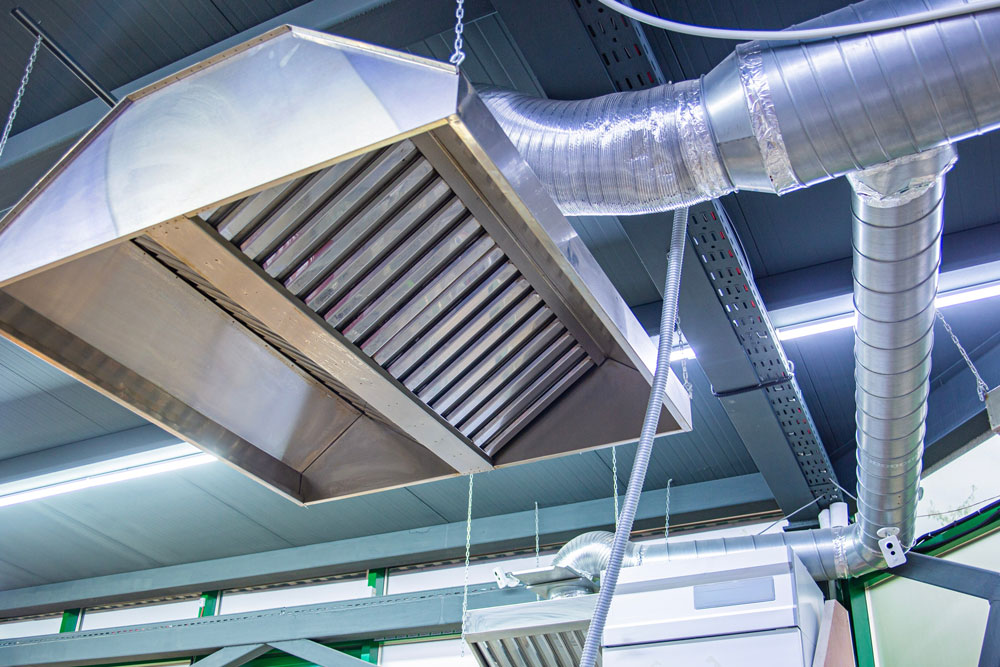
Proper kitchen exhaust hood maintenance involves much more than removing visible grease. Effective maintenance requires attention to the entire ventilation system, including hoods, ductwork, filters, fans, and access points.
Key Facts About Kitchen Exhaust Hood Maintenance
Kitchen exhaust systems require ongoing maintenance to control grease accumulation and maintain airflow. Neglecting hidden system components often creates greater risks than visible surface buildup. Consistent cleaning schedules help reduce fire hazards and support regulatory compliance. Documentation and inspection practices play an important role in long-term system performance.
Common Exhaust System Challenges in Commercial Kitchens
Kitchen exhaust hood maintenance challenges often begin when cleaning efforts focus only on what is visible. The entire exhaust system, from the hood canopy to the rooftop fan, must be maintained to ensure safe operation.
Some of the most frequent issues include:
Grease accumulation inside ductwork
Clogged or damaged filters
Restricted airflow
Fan performance problems
Missed inspection intervals
Incomplete maintenance records
Improper cleaning techniques
These issues can reduce system efficiency and increase operational risks over time.
If you would like a professional assessment of your kitchen ventilation system,
Kitchen exhaust hood maintenance is most effective when it follows established inspection and cleaning schedules based on cooking volume and grease production. Industry standards such as NFPA 96 provide guidance for cleaning frequencies and system maintenance requirements.
In our field experience, facilities that maintain documented cleaning schedules and regular inspections typically experience fewer emergency service issues than facilities that perform maintenance only when visible grease becomes noticeable.
Operators who view hood maintenance as a preventative measure rather than a reactive task generally achieve better long-term system performance.
How Maintenance Mistakes Impact Restaurant Operations
Kitchen exhaust maintenance mistakes can affect safety, efficiency, compliance, and operational continuity. Even minor oversights may create conditions that increase fire risks or reduce ventilation effectiveness.
Poor exhaust system care can lead to:
Increased grease accumulation
Reduced airflow and ventilation
Higher equipment wear
Potential compliance concerns
Increased downtime for corrective maintenance
Less comfortable kitchen environments
For restaurants operating during peak business periods, unexpected ventilation issues can disrupt normal operations and create avoidable expenses.
Expert Commentary on Hood Maintenance Pitfalls
Hood maintenance pitfalls often stem from the misconception that visible cleanliness equals system cleanliness. While clean hood surfaces are important, hidden components frequently present the greatest concerns.
We regularly observe facilities where exterior surfaces appear clean while grease remains inside ductwork or around exhaust fan assemblies. This disconnect highlights the importance of comprehensive maintenance procedures rather than surface-level cleaning.
We recommend treating the entire exhaust system as one connected safety system rather than a collection of individual components.
Warning Signs of Inadequate Hood Maintenance
Signs of inadequate hood maintenance often appear gradually before major issues develop. Recognizing these indicators early can help prevent more serious problems.
Common warning signs include:
Excessive grease accumulation on hood surfaces
Reduced smoke capture performance
Persistent cooking odors
Visible grease around rooftop fans
Unusual fan noise or vibration
Grease dripping from components
Increased kitchen heat levels
Poor airflow near cooking equipment
Ignoring these symptoms can allow underlying problems to worsen over time.
When Professional Hood Cleaning Becomes Necessary
Professional hood cleaning becomes necessary when grease accumulation extends beyond routine staff cleaning capabilities or when complete system access is required. Trained technicians have the tools and procedures needed to clean internal system components safely and thoroughly.
Kitchen staff can typically handle daily surface cleaning and filter maintenance. However, internal ductwork, fan assemblies, and other system components often require specialized expertise.
Professional service helps ensure all areas receive proper attention while reducing the likelihood of missed problem areas.
If you are concerned about grease buildup or ventilation performance,
Most kitchen exhaust maintenance issues result from inconsistent schedules, incomplete cleaning procedures, or insufficient inspections.
The most common causes include:
Delayed cleaning intervals
Incomplete duct cleaning
Neglected exhaust fan maintenance
Lack of inspection documentation
Improper cleaning products or methods
Failure to replace damaged components
Addressing these causes early helps prevent more significant maintenance challenges.
Prevention Strategies for Long-Term Performance
Preventing hood maintenance problems requires consistency and attention to detail. A proactive maintenance program is generally more effective than responding to issues after they appear.
Recommended prevention practices include:
Following scheduled cleaning intervals
Conducting regular inspections
Maintaining accurate service records
Monitoring grease accumulation levels
Cleaning all accessible system components
Addressing minor issues promptly
Verifying fan performance routinely
Preventative maintenance helps improve reliability while reducing unexpected disruptions.
Expected Results from Proper Exhaust System Care
Proper exhaust system care helps improve ventilation performance, reduce grease accumulation, and support safer kitchen operations. Consistent maintenance also contributes to longer equipment life and fewer emergency service calls.
Restaurant operators who prioritize routine maintenance often experience:
Better airflow
Improved smoke capture
Reduced grease buildup
Enhanced operational reliability
Greater confidence during inspections
While maintenance cannot eliminate every equipment issue, it significantly reduces preventable problems.
Expert Insight: One of the most overlooked maintenance opportunities is routine documentation. Facilities that track inspections, cleanings, and corrective actions often identify developing issues earlier and make more informed maintenance decisions.
Common Mistakes to Avoid
Common hood maintenance mistakes can increase risk, reduce efficiency, and create unnecessary expenses.
Mistake
Consequence
Better Approach
Cleaning only visible surfaces
Hidden grease accumulation remains
Clean the entire system
Skipping scheduled service
Increased grease buildup
Follow a documented schedule
Ignoring rooftop fan areas
Reduced ventilation performance
Include fan assemblies in inspections
Failing to replace damaged filters
Airflow restrictions
Inspect and replace filters as needed
Using improper cleaning methods
Incomplete grease removal
Follow approved cleaning procedures
Neglecting maintenance records
Difficult compliance tracking
Maintain detailed documentation
A Common Restaurant Scenario
A common local scenario involves a restaurant that maintains clean hood surfaces but postpones comprehensive system cleaning because operations appear normal. Over time, grease accumulates inside ductwork and around exhaust fans, reducing airflow and increasing maintenance concerns.
After a thorough inspection and full-system cleaning, airflow improves, grease accumulation is removed, and the facility gains a clearer understanding of its ongoing maintenance needs.
This scenario demonstrates why comprehensive maintenance is more effective than addressing only visible issues.
Services That Support Effective Hood Maintenance
Professional hood cleaning services help address many of the maintenance challenges discussed in this article. Comprehensive services may include hood cleaning, duct cleaning, exhaust fan cleaning, system inspections, and maintenance documentation.
At The Foster Family Companies, we emphasize quality assurance throughout the cleaning process. Our approach focuses on thorough system evaluation, detailed cleaning procedures, and verification practices designed to help ensure every accessible component receives proper attention.
By combining cleaning services with consistent inspection practices, we help restaurant operators support safer and more reliable kitchen operations.
To learn more about available maintenance options,
Comparing DIY Maintenance and Professional Service
DIY maintenance and professional hood cleaning serve different purposes. Daily staff cleaning is important for maintaining visible cleanliness, while professional service addresses internal components and system-wide maintenance needs.
DIY Maintenance
Professional Service
Daily surface cleaning
Full-system cleaning
Basic filter care
Duct and fan cleaning
Routine visual inspections
Detailed system evaluations
Immediate spill cleanup
Comprehensive grease removal
Operational housekeeping
Maintenance documentation
Both approaches work best when used together as part of a complete maintenance strategy.
The Cost of Ignoring Maintenance Issues
Ignoring kitchen exhaust maintenance issues can increase operational costs, create safety concerns, and contribute to equipment deterioration. Small maintenance problems often become more expensive when left unresolved.
Potential consequences include:
More extensive cleaning requirements
Reduced equipment lifespan
Ventilation performance issues
Increased downtime
Greater repair expenses
Elevated fire risks
Addressing concerns early is usually more efficient than managing major corrective work later.
If your facility has not had a recent system evaluation,
What are the most common hood maintenance pitfalls?
The most common hood maintenance pitfalls include skipped cleanings, incomplete duct cleaning, neglected exhaust fans, poor documentation, and focusing only on visible grease buildup.
How often should restaurant exhaust hoods be cleaned?
Cleaning frequency depends on cooking volume, menu type, and grease production. Many facilities follow schedules based on industry standards and inspection recommendations.
Why are common restaurant cleaning errors so problematic?
Common restaurant cleaning errors often leave hidden grease deposits inside the ventilation system. These areas can create performance issues and increase safety risks.
What is included in professional exhaust system care?
Professional exhaust system care typically includes cleaning hoods, filters, ductwork, exhaust fans, and other accessible ventilation components.
Can kitchen staff perform all hood maintenance?
Kitchen staff can handle routine cleaning and monitoring, but comprehensive system cleaning often requires specialized equipment and expertise.
Why is documentation important during hood maintenance?
Maintenance records help track service history, identify recurring issues, and support inspection readiness.
How can operators improve maintenance consistency?
Operators can improve consistency by implementing documented schedules, assigning responsibilities, and conducting regular inspections.
What role does quality assurance play in hood cleaning?
Quality assurance helps verify that all accessible system components have been inspected and cleaned according to established procedures.
Restaurant operators and maintenance personnel face enough challenges without preventable exhaust system issues creating additional complications. Consistent maintenance, thorough inspections, and attention to common cleaning mistakes can help keep kitchen ventilation systems operating safely and efficiently.
Keep Your Kitchen Exhaust System Performing at Its Best
A proactive maintenance strategy can help reduce risk, improve system performance, and support smoother restaurant operations. The Foster Family Companies understands the challenges of commercial kitchen exhaust maintenance and the importance of getting the job done right.
If you run a commercial kitchen, you already know that keeping things clean is not just about appearances. It is about safety, compliance, and the long-term health of your equipment. One of the most overlooked components in any professional kitchen is the exhaust hood. It works hard every single day, pulling grease, smoke, and heat out of the air so your staff can breathe easy and your kitchen can operate without turning into a fire hazard. But when was the last time you really looked at it?
Neglecting your exhaust hood is one of the most common and costly mistakes restaurant owners make. Grease builds up fast in a busy kitchen, and once that buildup reaches a dangerous level, you are no longer just dealing with a maintenance issue. You are dealing with a serious commercial kitchen safety risk. Knowing the exhaust hood warning signs before things get out of hand can save your business from fines, shutdowns, or worse.
Here are the top five signs your kitchen exhaust hood needs cleaning as soon as possible.
1. Visible Grease Buildup on Filters and Surfaces
The most obvious of all the exhaust hood warning signs is grease that you can actually see. If you look up at your hood and notice a thick, yellowish or brownish coating on the filters, the interior walls, or around the edges of the canopy, that is a clear indication that cleaning is overdue.
Grease filters are designed to trap airborne grease particles before they enter the ductwork. When those filters become completely saturated, they stop doing their job effectively. At that point, grease begins to travel deeper into the exhaust system, coating the ductwork and fan components. This creates a compounding problem that gets more expensive and more dangerous the longer it is ignored.
In terms of commercial kitchen safety, saturated grease filters are one of the leading contributors to kitchen fires. Grease is highly flammable, and all it takes is one spark or a surge of heat from the cooking equipment below to ignite a buildup that has been accumulating for weeks or months. If you can visibly see grease dripping, pooling, or forming a crust on any part of your hood system, stop what you are doing and schedule a cleaning immediately.
Restaurant cleanliness standards also demand that visible grease not be present in food preparation areas. Health inspectors take this seriously, and a greasy hood can result in violations that damage your reputation and your bottom line.
2. Reduced Airflow and Poor Ventilation Performance
A well-functioning exhaust hood pulls air efficiently, removing heat, smoke, steam, and cooking odors from the kitchen environment. When your hood starts to struggle with this basic task, it is telling you something important.
If your kitchen staff notices that the space feels hotter than usual, that smoke lingers longer after cooking, or that odors are not clearing out as quickly as they should, reduced airflow is likely the culprit. This happens when grease and debris clog the filters and ductwork to the point where air simply cannot move through freely.
Poor ventilation is more than a comfort issue. It is a commercial kitchen safety concern that affects your staff directly. Working in a hot, poorly ventilated kitchen leads to fatigue, discomfort, and in extreme cases, heat-related illness. It also affects the quality of your food, since lingering smoke and steam can alter the flavors and presentation of dishes coming out of the kitchen.
From a restaurant cleanliness standpoint, inadequate ventilation allows grease-laden air to settle on surfaces throughout the kitchen. Countertops, equipment, and even food storage areas can become contaminated when the hood is not doing its job. Reduced airflow is one of the most telling exhaust hood warning signs, and it should never be brushed aside as a minor inconvenience.
3. Unusual Noises Coming From the Hood System
Your exhaust hood and its fan motor have a baseline sound that your kitchen staff hears every day. When that sound changes, it is worth paying attention. Grinding, rattling, banging, or an unusually loud hum coming from the hood unit can indicate mechanical problems that are often linked to excessive grease buildup.
When grease accumulates on the fan blades, it adds weight and creates an imbalance. This forces the motor to work harder to maintain the same level of airflow, which leads to increased noise and, over time, premature motor failure. A fan that is struggling to spin properly due to grease accumulation can overheat and become a fire source in its own right.
Catching this early is critical for both commercial kitchen safety and cost management. Replacing a fan motor or a damaged exhaust system is significantly more expensive than routine cleaning. If your team starts reporting strange sounds from the hood, do not wait for the problem to escalate. Have the system inspected and cleaned right away.
4. Smoke Is Not Being Captured Effectively
Under normal operating conditions, your exhaust hood should capture smoke almost immediately as it rises from your cooking equipment. If you are noticing that smoke is drifting out from the sides of the hood, spreading across the ceiling, or filling the kitchen before eventually being drawn in, your system is no longer capturing contaminants the way it should.
This is one of the more visible exhaust hood warning signs and one of the most serious from a restaurant cleanliness perspective. Smoke that is not properly captured deposits residue on walls, ceilings, equipment, and any exposed food surfaces. Over time, this creates a grimy, odor-saturated kitchen environment that is difficult to remediate and that health inspectors will flag without hesitation.
From a commercial kitchen safety standpoint, poor smoke capture also means that combustion byproducts are entering the breathing space of your staff. This includes carbon monoxide and other harmful compounds that accumulate when ventilation is insufficient. A hood that is no longer capturing smoke effectively is a hood that needs immediate attention, and cleaning is almost always the first step toward restoring proper function.
5. A Strong, Persistent Grease Odor in the Kitchen
Every kitchen has a cooking smell. That is expected and unavoidable. What is not normal is a heavy, rancid, or burning grease odor that persists even when the kitchen is not actively cooking. If your staff or customers are noticing an unpleasant smell that seems to be coming from the hood area, that odor is a direct signal that grease has built up to a level where it is beginning to break down or smolder.
Old grease that has been sitting in a hood system for too long starts to oxidize and degrade. This produces a stale, rancid smell that no amount of surface cleaning will eliminate. The only solution is a thorough cleaning of the entire exhaust system, including the filters, the interior plenum, the ductwork, and the fan unit.
This is also one of the exhaust hood warning signs that customers can sometimes detect from the dining room. Nothing damages restaurant cleanliness and customer perception faster than walking into a space that smells like old grease. Your reputation depends on a clean, fresh-smelling environment, and a neglected hood system can undermine all of the effort you put into front-of-house presentation.
Strong odors are also associated with grease that is close to its ignition point. When old grease begins to smoke at lower temperatures than fresh grease, commercial kitchen safety is already being compromised. Do not let a persistent smell go uninvestigated.
Conclusion
Your exhaust hood is one of the hardest-working pieces of equipment in your kitchen, and it deserves regular attention. Visible grease, poor airflow, unusual noises, ineffective smoke capture, and persistent odors are all clear signals that cleaning cannot wait. Staying ahead of these exhaust hood warning signs protects your staff, preserves your equipment, and upholds the commercial kitchen safety and restaurant cleanliness standards your business depends on. Schedule regular cleanings, train your team to recognize the signs, and never treat hood maintenance as optional.
Need a Facility Services Provider Near You?
We’re here to help protect what matters most to you—your people, your information, and your environment. At The Foster Family Companies, our team is passionate about delivering reliable fire and life safety systems, secure document destruction, and spotless janitorial services tailored to your unique needs. Whether you’re looking to safeguard your facility, maintain confidentiality, or ensure a clean and healthy workplace, we’ve got the experience and commitment to get the job done right. Reach out to us today and let’s build a safer, cleaner future together.