Running a commercial kitchen means operating under constant scrutiny. Health departments, fire marshals, and insurance companies all have a stake in how clean and safe your cooking environment is. Among the many tasks that fall under a kitchen inspection checklist, exhaust hood cleaning is one of the most critical and most commonly overlooked. If your exhaust system is not properly maintained, you risk failed inspections, costly fines, and even the threat of fire.
Understanding how compliance cleaning connects to your exhaust hood services is the first step toward keeping your business protected.
Why Exhaust Hood Cleaning Is Central to Commercial Kitchen Compliance
The exhaust hood above your cooking equipment does more than remove smoke and odors. It captures grease-laden vapors that, over time, coat the interior surfaces of the hood, filters, ducts, and fan. This grease buildup is highly flammable, and it is the leading cause of commercial kitchen fires in the United States. Health and fire code regulations require that exhaust systems be cleaned at intervals based on the volume and type of cooking your kitchen performs.
A kitchen inspection checklist used by local fire marshals and health departments will almost always include a section dedicated to the exhaust system. Inspectors look for visible grease accumulation, the condition of filters, access panels, and whether the system has been serviced by a certified professional. Kitchens that cook heavily, such as those using solid fuels like wood or charcoal, may be required to schedule exhaust hood services as frequently as every month. High-volume operations using gas or electric equipment might require quarterly cleanings. Lower-volume establishments may qualify for semi-annual or annual service.
Falling behind on this schedule is not just a cleanliness issue. It is a legal and financial liability. Inspectors are trained to spot neglect, and a grease-caked exhaust system will trigger immediate action, including re-inspection fees, mandatory shutdowns, and potential increases in your insurance premiums.
What Inspectors Look for During an Exhaust System Evaluation
When an inspector arrives at your facility, they are not just taking a quick glance at your kitchen. They are conducting a detailed review of every component that could contribute to a fire or health hazard. The exhaust hood evaluation is one of the most technical parts of this process, and it involves more than checking if the hood looks clean from the outside.
Inspectors will check the filters for grease saturation. Filters that are dripping with grease or visibly clogged are a red flag. They will look inside the plenum area, the space between the filters and the duct, for signs of heavy buildup. They will also examine the ductwork itself, either directly or through documentation from your last professional cleaning. Access panels must be present and properly secured so that inspectors and cleaning crews can reach the interior of the system.
One important thing to note is that inspectors may ask for your cleaning logs. Reputable exhaust hood services providers always leave behind a detailed service report after each visit. This report documents what was cleaned, the condition of the system before and after service, and a recommendation for the next cleaning date. Keeping these records organized is a key part of your kitchen inspection checklist and demonstrates to any inspector that you take compliance cleaning seriously.
Some jurisdictions also require that cleaning companies post an inspection sticker on the hood itself, showing the date of the last service and the name of the company that performed the work. If your sticker is outdated, that alone can trigger a failed inspection.
The Connection Between Compliance Cleaning and Fire Safety Codes
The National Fire Protection Association, specifically NFPA 96, sets the standard for ventilation control and fire protection in commercial cooking operations. Most local fire codes are based on or directly reference NFPA 96, making it the backbone of what inspectors enforce when they evaluate your exhaust system.
Under these guidelines, compliance cleaning is not a suggestion. It is a requirement with enforceable penalties. The code specifies not only how frequently cleaning must occur but also what methods are acceptable, what protective measures must be in place during cleaning, and what documentation must be maintained. Cleaning must be thorough enough to remove grease from all surfaces, including the hard-to-reach areas deep inside the ducts and at the rooftop exhaust fan.
Exhaust hood services that follow NFPA 96 standards use high-pressure hot water systems and specialized degreasers to break down and remove grease completely. Partial cleaning, which sometimes happens when unqualified contractors or in-house staff attempt the job, does not satisfy code requirements and can leave dangerous accumulations in areas that are not visible during a surface inspection. If a fire occurs and investigators find that cleaning was incomplete or improperly documented, your insurance claim could be denied and your business could face serious legal consequences.
Understanding this connection between compliance cleaning and fire safety codes is essential for any kitchen operator who wants to stay protected. It is not just about passing an inspection. It is about ensuring that your staff, your customers, and your property are safe every single day.
How to Build Exhaust Hood Cleaning Into Your Inspection Preparation Routine
Preparing for an inspection should not be a last-minute scramble. The most successful commercial kitchens treat compliance as an ongoing process rather than a periodic event. Building exhaust hood services into your regular maintenance calendar is the most reliable way to stay ahead of inspections and avoid surprises.
Start by identifying the correct cleaning frequency for your operation. Consult your local fire code or contact your fire marshal’s office if you are unsure. Then schedule your exhaust hood services with a certified cleaning company well in advance, leaving enough time to address any follow-up work if the technician identifies damage or repairs that need attention.
Create a dedicated file for all your compliance cleaning documentation. This should include every service report from your cleaning provider, a copy of the inspection sticker or equivalent certificate, and any correspondence with your fire marshal or health department regarding your exhaust system. When an inspector arrives, being able to produce this file quickly shows professionalism and significantly reduces the likelihood of a failed inspection.
Your kitchen inspection checklist should also include a pre-inspection walkthrough that you or your manager conducts in the days before an official visit. Check the filters for visible grease and replace or clean them if needed. Look at the outside of the hood for drips or residue. Make sure access panels are properly secured. Confirm that your service documentation is current and on file. These small steps can make a meaningful difference in how an inspection goes.
It also helps to build a relationship with your exhaust hood services provider. A company that knows your kitchen, your equipment, and your cooking volume can offer more accurate scheduling recommendations and flag potential compliance issues before they become violations.
Conclusion
Exhaust hood cleaning sits at the intersection of fire safety, health compliance, and business continuity. Every item on a kitchen inspection checklist matters, but few carry the weight that a properly maintained exhaust system does. Compliance cleaning is not simply a box to check; it is a commitment to the safety of everyone who walks through your doors. By partnering with qualified exhaust hood services professionals and keeping thorough documentation, you give your business the strongest possible foundation for passing inspections and operating with confidence. Stay proactive, stay documented, and let your clean kitchen tell the story of a business that takes its responsibilities seriously.
Need a Facility Services Provider Near You?
We’re here to help protect what matters most to you—your people, your information, and your environment. At The Foster Family Companies, our team is passionate about delivering reliable fire and life safety systems, secure document destruction, and spotless janitorial services tailored to your unique needs. Whether you’re looking to safeguard your facility, maintain confidentiality, or ensure a clean and healthy workplace, we’ve got the experience and commitment to get the job done right. Reach out to us today and let’s build a safer, cleaner future together.
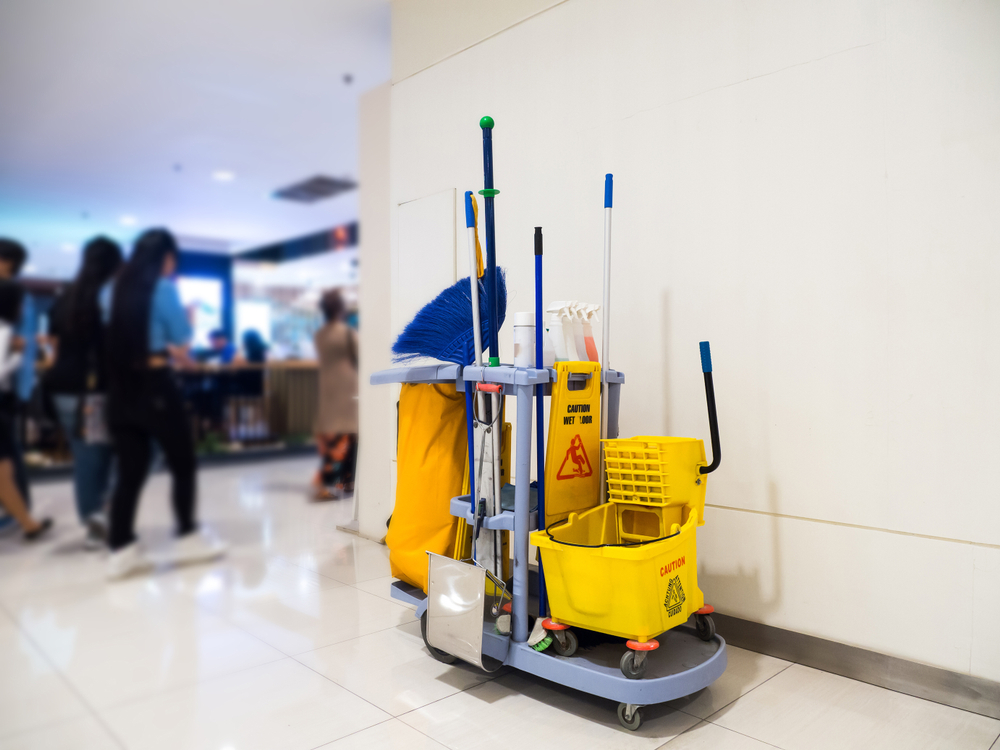
Every morning, employees walk into sparkling offices, fresh-smelling lobbies, and spotless restrooms without giving much thought to how it all came together. The floors did not mop themselves. The trash did not empty itself. The windows did not wipe themselves clean. Behind every well-maintained workspace stands a team of dedicated professionals whose work often goes unnoticed until something goes wrong. Professional janitors are the backbone of a healthy, functioning workplace, and the time has come to recognize the full scope of what they contribute.
Understanding the office cleaning benefits that come with hiring a trained janitorial team goes far beyond aesthetics. It is a conversation about health, productivity, morale, and long-term financial savings. Businesses that invest in professional cleaning services are making a strategic decision, not just a practical one.
More Than Meets the Eye: What Professional Janitors Actually Do
The average person might picture a janitor pushing a mop down a hallway, but that image barely scratches the surface of what modern professional janitors do on a daily basis. These workers are trained in sanitation protocols, chemical handling, waste disposal regulations, and industry-specific cleaning standards. In medical offices, they help prevent the spread of infection. In schools, they maintain environments where children spend the majority of their waking hours. In corporate settings, they protect equipment, preserve building materials, and uphold the image of the organization.
Professional janitors follow detailed cleaning schedules that cover everything from high-touch surfaces like doorknobs and elevator buttons to deep-cleaning tasks like carpet extraction and floor buffing. They are often the first to notice a leaking pipe, a broken fixture, or a safety hazard that could become a costly problem if left unaddressed. In this way, they serve an informal but valuable facility management role that saves businesses both time and money.
Their work also extends into areas that most employees never think about, such as air quality. Dust, mold, allergens, and bacteria build up in HVAC vents, on blinds, and beneath furniture. A thorough janitorial team addresses these hidden threats regularly, contributing to an environment where people can breathe easier, both literally and figuratively.
The Link Between Cleanliness and Cleaning Productivity
There is a growing body of research that connects workplace cleanliness directly to employee performance. Cleaning productivity is not just a buzzword; it reflects a measurable reality that forward-thinking companies are beginning to take seriously. When employees work in cluttered, dirty, or disorganized environments, their ability to focus suffers. Visual noise competes for cognitive attention, and the presence of mess has been shown to increase stress levels and reduce motivation.
On the flip side, a clean and organized workspace sends a signal to employees that their well-being matters. It creates an environment that supports concentration, reduces anxiety, and promotes a sense of professional pride. Workers who feel comfortable in their surroundings tend to be more engaged, more collaborative, and less likely to take sick days.
Speaking of sick days, the role of professional cleaning in reducing illness-related absenteeism cannot be overstated. Common cold and flu viruses can survive on surfaces for hours, and in a shared office environment, a single sick employee can trigger a chain reaction of illnesses. Regular disinfection of shared surfaces, restrooms, and break rooms dramatically reduces this risk. When employees stay healthier, companies lose fewer hours to absenteeism, and cleaning productivity translates directly into bottom-line results.
The connection between office cleaning benefits and overall workforce performance is supported by facility management research and organizational behavior studies alike. Businesses that prioritize cleanliness see improved staff retention, higher satisfaction scores, and stronger workplace culture. These outcomes are not coincidental. They are the direct result of creating an environment where people feel valued.
First Impressions and Brand Reputation
Businesses spend enormous amounts of money on branding, marketing, and interior design. Yet all of that investment can be undermined by a dirty lobby, a stained carpet, or an unkempt restroom. The physical state of a workplace communicates a message to every visitor, client, and potential hire who walks through the door.
Professional janitors play a critical role in protecting and reinforcing a company’s brand image. When a client visits an office for the first time, they are forming an opinion about the organization’s attention to detail, professionalism, and values. A pristine environment says that the company cares about quality. A neglected one raises questions about standards across every department.
This principle applies to industries well beyond the corporate world. Restaurants live or die on cleanliness. Retail stores depend on appealing, clean displays. Healthcare facilities must maintain immaculate environments to retain patient trust and meet regulatory requirements. In every one of these contexts, professional janitors are actively protecting the organization’s reputation with every shift they work.
The office cleaning benefits here are not abstract. They are tied to revenue, client retention, and competitive positioning. A business that consistently presents a clean, welcoming environment is one that signals stability and trustworthiness to the outside world.
The Human Side: Respect, Fair Treatment, and Recognition
Any honest conversation about the value of professional janitors must also include a discussion of how they are treated. These workers perform physically demanding, often unglamorous work, and they deserve more than an afterthought in the broader conversation about workplace culture.
In many organizations, janitorial staff are invisible in a social sense. They work during off-hours, move quietly through shared spaces, and rarely receive the recognition given to other departments. Yet their contribution to the functioning of the workplace is just as essential as that of any other team. Without their work, productivity would suffer, health risks would rise, and the professional image of the organization would erode quickly.
Forward-thinking companies are beginning to change this dynamic. They are recognizing professional janitors as valued team members, including them in workplace communications, offering competitive wages and benefits, and ensuring safe working conditions. Some organizations have begun celebrating janitorial staff during employee appreciation events, acknowledging the real and tangible impact of their work on the broader team.
This shift in perspective matters for morale across the entire organization. When employees see their company treating all workers with dignity and respect, it reinforces the cultural values that attract and retain top talent. A workplace that honors the contributions of every role, regardless of title or visibility, is one that people are proud to be a part of.
Recognizing the value of professional janitors is also an issue of equity. Many janitorial workers come from communities that face economic and social challenges. Providing fair compensation, safe conditions, and respectful treatment is not just good business practice; it is a reflection of an organization’s broader commitment to ethical operations.
Conclusion
Professional janitors are essential contributors to the health, productivity, and image of every workplace they serve. The office cleaning benefits they deliver go far beyond surface-level tidiness. They protect employee health, support cleaning productivity, reinforce brand reputation, and reflect an organization’s values in concrete, daily ways. It is time for businesses of all sizes to recognize the professional janitors who keep their environments safe and functional, not as an invisible workforce operating in the background, but as indispensable members of the team whose contributions deserve genuine acknowledgment and respect.
Need a Facility Services Provider Near You?
We’re here to help protect what matters most to you—your people, your information, and your environment. At The Foster Family Companies, our team is passionate about delivering reliable fire and life safety systems, secure document destruction, and spotless janitorial services tailored to your unique needs. Whether you’re looking to safeguard your facility, maintain confidentiality, or ensure a clean and healthy workplace, we’ve got the experience and commitment to get the job done right. Reach out to us today and let’s build a safer, cleaner future together.
The modern workplace has changed in ways that few people could have predicted before 2020. The COVID-19 pandemic reshaped how businesses think about cleanliness, employee well-being, and the shared spaces where people spend a significant portion of their lives. Post-pandemic cleaning is no longer a routine checkbox on a facilities management list. It has become a core pillar of responsible business operations. Companies that invest in professional janitorial services are not just keeping their offices tidy; they are actively protecting their workforce and building a culture of trust and accountability.
As employees returned to offices around the world, they brought heightened expectations with them. Workers now pay close attention to the cleanliness of their environment in ways that simply were not common before the pandemic. A visibly clean office signals that leadership takes health seriously. A poorly maintained space, on the other hand, can erode morale, increase absenteeism, and even contribute to employee turnover.
Professional janitorial services bridge the gap between what employees expect and what businesses can realistically manage on their own.
The Science Behind Clean Workspaces and Employee Health
Understanding why office hygiene practices matter requires a closer look at how germs and pathogens spread in shared environments. Offices are high-contact zones where dozens or hundreds of people touch the same surfaces throughout the day. Doorknobs, elevator buttons, shared keyboards, communal kitchen appliances, and restroom fixtures are all potential transmission points for illness-causing bacteria and viruses.
Research conducted in the years following the pandemic has reinforced what many health experts already suspected: the quality and frequency of cleaning in a workplace directly affects the health outcomes of its occupants. Regular disinfection of high-touch surfaces can significantly reduce the presence of harmful pathogens. When janitorial teams use hospital-grade cleaning agents and follow evidence-based protocols, they eliminate threats that casual or untrained cleaning would miss entirely.
Beyond surface cleaning, air quality has emerged as a critical component of office health. Professional cleaning services often incorporate strategies that support better indoor air quality, including the cleaning of ventilation systems, filters, and air-handling units. Dust accumulation in these systems can circulate allergens and airborne particles throughout an entire building. A thorough janitorial program addresses these less visible threats alongside the more obvious ones, creating a comprehensive shield against illness.
Employees who work in consistently clean environments also report lower levels of stress and higher levels of productivity. Clutter and visible grime create a subtle but persistent psychological burden. When that burden is removed through reliable, professional cleaning, workers can focus more completely on their tasks and experience a greater sense of well-being throughout the workday.
COVID Office Safety Standards That Have Become the New Normal
The protocols developed in response to COVID office safety requirements have largely become permanent features of how forward-thinking organizations operate. What began as emergency measures have evolved into best practices that benefit workers regardless of what specific illness might be circulating in any given season.
Electrostatic spraying, for example, was introduced widely during the pandemic as a way to coat surfaces with disinfectant more effectively than traditional wiping methods. Many janitorial companies have retained this technology because of how thoroughly it covers irregular surfaces like chairs, computer equipment, and shelving units. Similarly, the use of color-coded cleaning cloths to prevent cross-contamination between different areas of a building is now a standard expectation rather than a premium add-on.
Disinfection logs and cleaning schedules posted visibly throughout the office have also become a common feature of post-pandemic workplaces. These records serve a dual purpose. First, they hold cleaning teams accountable by creating a documented trail of when and where cleaning occurred. Second, they reassure employees and visitors that the space is being actively maintained. Transparency in cleaning practices has become a meaningful part of how companies communicate their commitment to worker safety.
Professional janitorial services stay current with guidance from public health agencies, updating their methods and products as new information becomes available. This adaptability is something that in-house or informal cleaning arrangements rarely achieve. The investment in a trained, informed janitorial team ensures that COVID office safety standards do not quietly fade as the immediate memory of the pandemic recedes.
Specialized Cleaning for High-Risk Office Zones
Not every part of an office carries the same level of health risk, and effective janitorial services recognize this distinction. A thoughtful cleaning plan allocates extra attention and resources to the areas where contamination is most likely to occur and spread.
Restrooms remain the highest-risk zone in virtually any commercial building. They require frequent cleaning throughout the day, not just at the end of a shift. Professional teams understand the chemistry of restroom sanitation well enough to select the right products for each surface, ensuring that the cleaning process actually eliminates pathogens rather than simply displacing them.
Break rooms and shared kitchens are another critical area. These spaces see high traffic from employees who are often touching their faces, handling food, and using communal appliances in quick succession. Post-pandemic cleaning protocols for these areas include wiping down microwave handles, coffee machine buttons, and refrigerator pulls multiple times per day. Sink faucets and soap dispensers receive particular attention because they are touched by people who are actively trying to clean their hands but may still be carrying contaminants from earlier in the day.
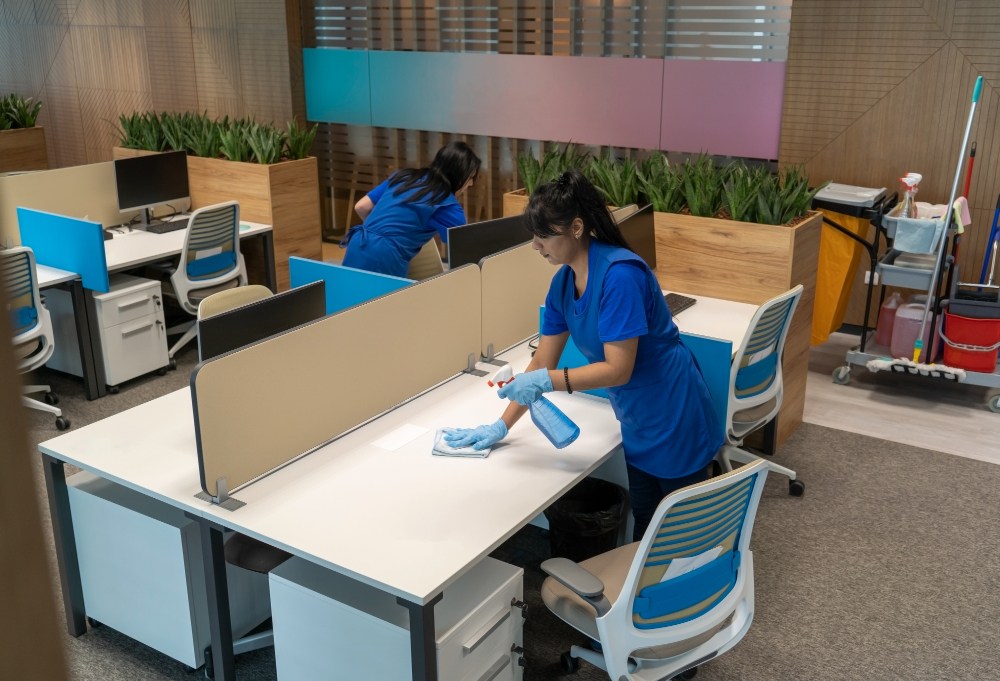
Open-plan work areas present their own challenges, particularly in offices that have adopted hot-desking or flexible seating arrangements. When multiple employees use the same workstation across different shifts or days, the risk of surface-to-surface transmission increases considerably. Janitorial teams trained in office hygiene practices know how to efficiently sanitize workstations between users without disrupting business operations, often working around employee schedules to minimize inconvenience while maximizing cleanliness.
Conference rooms and meeting spaces deserve special attention as well. These rooms concentrate groups of people in relatively small areas for extended periods, which historically makes them effective environments for the spread of respiratory illness. Regular disinfection of tables, chairs, remote controls, and shared technology in these spaces is a meaningful preventive measure that professional cleaners carry out as part of a systematic approach.
Choosing the Right Janitorial Partner for Long-Term Health and Safety
Selecting a janitorial service provider is a decision that deserves careful consideration, particularly given the elevated expectations that define the post-pandemic workplace. Not all cleaning companies offer the same level of training, the same quality of products, or the same commitment to evolving health standards.
Businesses should look for providers that employ staff trained in infection control principles and familiar with current public health guidelines. Certifications from organizations like ISSA, the worldwide cleaning industry association, are a useful indicator that a provider takes professional development seriously. Green cleaning certifications are also worth seeking out, as they indicate that a company uses products that are effective against pathogens while minimizing chemical exposure for building occupants.
Communication is another important factor. A strong janitorial partner will work with facility managers to develop customized cleaning plans that reflect the unique layout, occupancy, and risk profile of each office. They will provide documentation of services rendered and remain responsive when concerns arise. Office hygiene practices are most effective when they are treated as a collaboration between the cleaning team and the client, with both parties invested in continuous improvement.
Contracts should be reviewed with attention to the frequency of deep cleaning services versus routine maintenance visits. Post-pandemic cleaning expectations often include scheduled deep cleaning cycles in addition to daily maintenance, and businesses should confirm that these are explicitly included rather than assumed.
Conclusion
Professional janitorial services have become essential partners in the effort to maintain safe, healthy, and productive office environments. The lessons of the pandemic have permanently elevated what employees expect from their workplaces, and meeting those expectations requires expertise, consistency, and commitment. By investing in qualified cleaning professionals who understand post-pandemic cleaning standards, office hygiene practices, and COVID office safety requirements, businesses protect their most valuable asset: the people who show up every day to do the work.
Need a Facility Services Provider Near You?
We’re here to help protect what matters most to you—your people, your information, and your environment. At The Foster Family Companies, our team is passionate about delivering reliable fire and life safety systems, secure document destruction, and spotless janitorial services tailored to your unique needs. Whether you’re looking to safeguard your facility, maintain confidentiality, or ensure a clean and healthy workplace, we’ve got the experience and commitment to get the job done right. Reach out to us today and let’s build a safer, cleaner future together.
For much of the twentieth century, facility management was treated as a back-office concern. Buildings needed to be cleaned, maintained, and occasionally repaired, and the people responsible for those tasks operated largely in the background of corporate life. Their work was reactive by nature: a pipe broke, a technician arrived; a light burned out, a request was submitted. The entire model was defined by responding to problems after they surfaced, rather than anticipating and preventing them before they caused disruption.
That model served organizations reasonably well when buildings were simpler, workforces were smaller, and the demands placed on physical spaces were more predictable. But as businesses grew in complexity, so did the environments they operated in. Multi-site portfolios, hybrid workforces, energy regulations, and the rise of the digital workplace all created pressure for something more capable and cohesive. The era of fragmented, siloed facility management began to give way to something fundamentally different: a coordinated, technology-driven discipline now known as integrated facility services.
Once defined by maintenance schedules and equipment oversight, today’s role has expanded into a strategic enabler of business goals. Facilities teams, once focused on keeping buildings safe and operational, are now recognized as drivers of value across multiple dimensions. This transformation did not happen overnight, but the momentum behind it has accelerated sharply in recent years, reshaping how organizations think about their physical environments and the people who manage them.
The Rise of Integrated Management and Why It Matters
The concept of integrated management in the facilities space refers to the consolidation of all facility-related services, processes, and systems under a single unified strategy. Rather than contracting separately for cleaning, security, maintenance, landscaping, and HVAC services, organizations increasingly work within a framework where all of those functions are coordinated together, share data, and are evaluated against common performance metrics.
The global integrated facilities management market reached USD 177.47 billion in 2025 and is projected to grow to USD 328.20 billion by 2034, driven by demand for operational efficiency and cost reduction. That kind of market growth reflects a broad and deep shift in organizational priorities. Businesses are no longer content to manage facilities as a collection of separate vendor relationships. They want coherence, accountability, and measurable results.
The financial case for this shift is compelling. IFM consolidation reduces facility operating costs by 15 to 25 percent within two years through elimination of duplicate systems, optimized resource allocation, and improved vendor management. Organizations with mature IFM programs achieve 30 to 40 percent better cost per square foot performance compared to fragmented operations while maintaining higher occupant satisfaction.
Beyond the numbers, the strategic rationale is equally strong. Businesses are increasingly looking to streamline operations, reduce complexity, and unlock more value from their technology investments. Unified platforms that connect visitor management, emergency protocols, and compliance systems play a critical role in driving efficiency and effectiveness. When facility services operate as a single, coordinated system, the organization benefits from faster decision-making, fewer gaps in service delivery, and a clearer picture of where resources are being spent.
Technology as the Engine of Facility Services Evolution
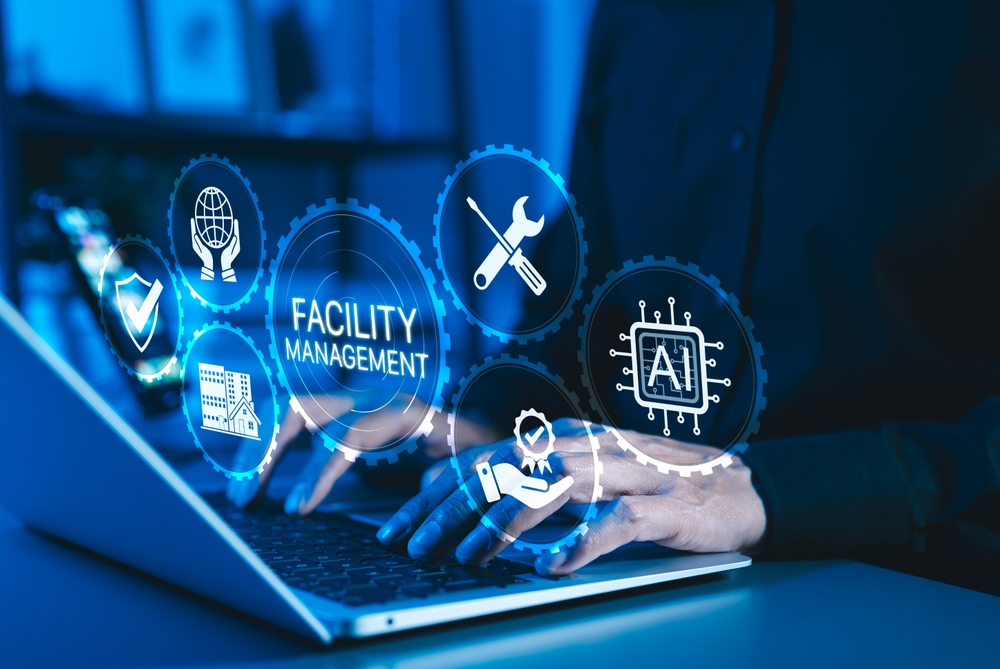
No discussion of the facility services evolution would be complete without addressing the technology revolution that is powering it. The tools available to facility managers today bear little resemblance to the clipboards and work order binders of a generation ago. Sensors, artificial intelligence, machine learning, and cloud-based platforms have fundamentally changed what is possible.
Market trends have featured the dawn of Maintenance 4.0, which involves the integration of advanced technologies including the Internet of Things, artificial intelligence, machine learning, and big data analytics. This approach enables managers to collect and analyze vast amounts of real-time data, make data-driven decisions, and identify potential issues before they occur.
Predictive maintenance has emerged as one of the most impactful applications of this technological shift. Rather than waiting for equipment to fail or replacing components on a rigid schedule regardless of actual condition, facility teams can now monitor assets continuously and intervene precisely when needed. Predictive maintenance powered by real-time analytics helps teams schedule service when it is actually needed, not too early and not too late. This precision reduces overservicing, extends asset lifecycles, and lowers maintenance costs. It also means fewer unplanned outages, which translates directly into better performance at a facility.
Organizations investing in smart building systems report efficiency gains of up to 30 percent in energy use. For large commercial portfolios, those gains represent significant dollar savings and a meaningfully reduced environmental footprint. The facilities management industry is shifting toward flexible, on-demand service models, and technology is a crucial enabler of this evolution. By coupling remote monitoring and support with IoT and predictive maintenance, companies realize cost efficiencies through optimized resource allocation and pay-as-you-go models.
Business Efficiency as the Central Measure of Success
At the heart of the integrated facility services conversation is business efficiency. The question organizations are asking is no longer simply whether a building is functional. They are asking whether the facilities strategy is actively contributing to broader organizational performance. Are employees more productive? Are energy costs under control? Are compliance obligations being met without excessive administrative burden?
Facilities embracing strategic modernization achieve 40 to 50 percent improvements in operational efficiency while reducing maintenance costs by 35 to 45 percent compared to those maintaining traditional management approaches. These are not marginal improvements. They represent a structural shift in how much value a well-run facilities program can deliver to an organization.
Advanced sensing capabilities for temperature, humidity, and noise are being adopted at higher rates as building systems evolve into integrated ecosystems with subsystems for lighting, HVAC, window shading, and other functions. As they manage and extract insight from these systems, facility managers are furthering their evolution from operational overseers to strategic, data-driven decision-makers.
The human dimension of business efficiency is equally important. Employees expect workplaces that support their productivity, health, and work-life balance. Facility leaders are uniquely positioned to bridge these needs, improving operational efficiency while enhancing the employee experience. When people work in environments that are comfortable, safe, and well-maintained, the organizational benefits extend well beyond what shows up on a maintenance budget. Retention improves, absenteeism declines, and collaboration becomes easier.
A rapidly expanding coworking network operating across five European countries transformed its facility management approach, reducing operational costs by 31 percent while improving member satisfaction scores by 23 percent, achieving full ROI in just 11 months. That kind of result demonstrates what is achievable when facility services are treated as a strategic investment rather than a cost to be minimized.
Sustainability, ESG, and the Future of Integrated Facility Services
As organizations increasingly face scrutiny from regulators, investors, and employees on their environmental and social commitments, facility services have become central to the sustainability conversation. Buildings account for a substantial share of global energy consumption, and the teams managing those buildings hold enormous influence over how efficiently that energy is used.
Facility managers are expected to play a leading role in delivering on ESG (Environmental, Social, and Governance) goals. Whether it is tracking energy usage, managing waste reduction strategies, or reporting on emissions, facilities teams are now responsible for collecting and presenting accurate environmental data from their buildings.
Carbon accounting, energy optimization, and ESG reporting are becoming standard IFM capabilities rather than separate initiatives. Facilities management will play a central role in organizational sustainability strategies. This integration of sustainability into the core of facility operations reflects a broader maturation of the discipline. Facility managers are no longer just keeping the lights on; they are helping their organizations meet long-term commitments to stakeholders.
Looking ahead, the trajectory for integrated facility services points toward even greater sophistication. Digital twins, which are virtual replicas of physical facilities, will enable scenario planning, impact analysis before changes, and optimization of systems that are too complex for human intuition alone. Artificial intelligence will continue to deepen its role, not only in predictive maintenance but in space planning, occupancy optimization, and workforce coordination.
Conclusion
The facility services evolution represents one of the most consequential shifts in how organizations think about their physical environments. What was once a reactive, fragmented support function has become a strategic discipline with direct influence on business efficiency, employee experience, sustainability performance, and financial outcomes. Organizations that invest in integrated management approaches today are positioning themselves to operate more intelligently, more sustainably, and more competitively in the years ahead. The buildings of the future will not simply house the work; they will actively enable it.
Need a Facility Services Provider Near You?
We’re here to help protect what matters most to you—your people, your information, and your environment. At The Foster Family Companies, our team is passionate about delivering reliable fire and life safety systems, secure document destruction, and spotless janitorial services tailored to your unique needs. Whether you’re looking to safeguard your facility, maintain confidentiality, or ensure a clean and healthy workplace, we’ve got the experience and commitment to get the job done right. Reach out to us today and let’s build a safer, cleaner future together.
Organizations today are under constant pressure to reduce overhead while maintaining high standards of operation. One of the most effective yet underutilized approaches to achieving this balance is the integration of facility services under a single, coordinated management structure. When done correctly, integrated facility management savings can be substantial, touching everything from labor costs to energy consumption. Understanding how this model works and why it drives operational efficiency is the first step toward making smarter financial decisions for your organization.
Facility management has evolved significantly over the past two decades. What was once a collection of disconnected vendors and siloed departments has become a sophisticated discipline focused on delivering measurable value. Companies that embrace this shift are finding that cost reduction is not just possible; it is sustainable when the right systems are in place.
The True Cost of Fragmented Facility Management
Before exploring solutions, it helps to understand the problem that integration is designed to solve. Many organizations operate with a patchwork of service providers handling different aspects of their facilities. One company manages HVAC systems, another handles janitorial services, a third oversees landscaping, and a fourth manages security. Each vendor has its own contract, billing cycle, point of contact, and service standards.
This fragmentation creates hidden costs that rarely appear on a single line item in a budget report. Administrative overhead multiplies as staff spend time coordinating between vendors, resolving disputes, and managing renewals. Service gaps emerge when responsibilities fall between providers, leading to deferred maintenance that compounds into expensive repairs. Duplicated efforts waste both time and money, such as when multiple vendors show up with overlapping equipment or when preventive maintenance schedules are not aligned.
The lack of visibility into overall facility spending is another cost driver. Without a unified reporting structure, leadership cannot easily identify where money is being wasted or where operational efficiency could be improved. Fragmented management often results in reactive rather than proactive decision-making, which consistently proves more expensive in the long run.
Bundling Services for Maximum Facility Management Savings
One of the most direct paths to cost reduction is bundling facility services under a single integrated provider or management platform. This approach consolidates contracts, reduces vendor management time, and creates opportunities for volume-based pricing that individual service agreements simply cannot offer.
When services are bundled, the provider gains a complete picture of a facility’s needs and can deploy resources more intelligently. For example, a technician performing a routine HVAC inspection can simultaneously flag lighting issues or plumbing concerns, reducing the number of separate site visits required. This cross-functional awareness directly translates into facility management savings by eliminating redundant labor hours and travel costs.
Contract consolidation also strengthens your negotiating position. A single, comprehensive contract covering multiple service lines gives you greater leverage than several smaller agreements negotiated independently. Vendors are more motivated to offer competitive pricing and favorable terms when the full scope of the relationship is on the table.
Beyond direct cost savings, bundled services improve accountability. With a single point of contact responsible for overall facility performance, there is no ambiguity about who owns a problem. Response times improve, issues are resolved faster, and the cost of delays caused by vendor finger-pointing is eliminated.
Technology and Data as Drivers of Operational Efficiency
Modern integrated facility management is powered by technology, and organizations that leverage data effectively see some of the most dramatic gains in operational efficiency. Building automation systems, Internet of Things (IoT) sensors, and centralized facility management software have transformed how buildings are monitored and maintained.
Smart energy management is one of the clearest examples of technology-driven cost reduction. Automated systems can adjust lighting, heating, and cooling based on occupancy patterns, time of day, and external weather conditions. Studies have shown that smart building technology can reduce energy costs by anywhere from 20 to 30 percent, depending on the age of the building and the systems being replaced or upgraded.
Predictive maintenance is another area where technology delivers significant facility management savings. Rather than following a fixed maintenance schedule or waiting for equipment to fail, predictive systems use sensor data to identify when a piece of equipment is showing signs of stress or wear. Repairs made before a failure occurs are consistently less expensive than emergency repairs, and they avoid the operational disruptions that come with unplanned downtime.
Centralized dashboards and reporting tools give facility managers a real-time view of spending, performance metrics, and service delivery across all locations. This visibility supports better decision-making and enables leadership to identify trends, benchmark performance, and target areas for further cost reduction. When data is fragmented across multiple vendors and systems, this level of insight is simply not achievable.
Workforce Optimization and Its Impact on Cost Reduction
Labor is typically the largest cost driver in facility management, which makes workforce optimization a critical component of any cost-saving strategy. Integrated facility services create natural opportunities to streamline staffing, reduce overtime, and deploy personnel more effectively.
Cross-training employees is one practical approach that emerges from an integrated model. When workers are trained to handle multiple facility functions, coverage gaps are reduced without the need to bring in additional contractors. A maintenance technician who can also perform basic safety inspections or handle light carpentry work adds more value per hour than a specialist called in for each individual task.
Workforce management software, often included in integrated facility management platforms, helps supervisors schedule staff based on actual demand rather than fixed routines. This reduces unnecessary labor hours during low-demand periods and ensures adequate coverage during peak times. The result is a leaner, more responsive team that contributes directly to operational efficiency without sacrificing service quality.
Outsourcing non-core functions is another strategy that integrated facility management enables. By consolidating services and evaluating the full cost of in-house versus outsourced labor, organizations can make more informed decisions about where to invest in their own staff and where a managed service model delivers better value. The key is having accurate, complete data, which integrated management provides.
Employee retention also plays a role in cost reduction. High turnover in facility roles carries real costs in recruiting, onboarding, and lost productivity. Organizations that invest in structured training, clear career pathways, and consistent scheduling through an integrated model tend to see lower turnover rates, which contributes to long-term savings.
Building a Long-Term Savings Framework
Achieving sustainable cost reduction through integrated facility services requires more than a one-time contract consolidation. It demands a strategic, long-term mindset focused on continuous improvement, regular performance reviews, and a willingness to invest in the right tools and processes upfront.
Setting clear key performance indicators (KPIs) is essential. Metrics such as cost per square foot, preventive versus reactive maintenance ratios, energy use intensity, and service response times give organizations objective measures of whether their integrated approach is delivering the expected facility management savings. Without these benchmarks, it is difficult to quantify the return on investment or identify where adjustments are needed.
Regular service reviews create accountability and open the door for ongoing optimization. As a facility’s needs change, the integrated management approach should evolve as well. What works in year one may need to be refined in year three as occupancy patterns shift, equipment ages, or new technologies become available.
Finally, involving leadership in the facility management strategy ensures that cost reduction goals are aligned with broader organizational priorities. Facility management savings do not happen in isolation; they contribute to margin improvement, sustainability goals, and the overall financial health of the business.
Conclusion
Integrated facility services represent one of the most practical and impactful paths to cost reduction available to organizations today. By consolidating vendors, leveraging technology, optimizing labor, and building a data-driven management framework, businesses can achieve meaningful facility management savings while simultaneously improving operational efficiency. The upfront effort required to integrate services is modest compared to the long-term financial and operational benefits that follow.
Need a Facility Services Provider Near You?
We’re here to help protect what matters most to you—your people, your information, and your environment. At The Foster Family Companies, our team is passionate about delivering reliable fire and life safety systems, secure document destruction, and spotless janitorial services tailored to your unique needs. Whether you’re looking to safeguard your facility, maintain confidentiality, or ensure a clean and healthy workplace, we’ve got the experience and commitment to get the job done right. Reach out to us today and let’s build a safer, cleaner future together.